Road Markings
Road markings — lines, arrows and symbols painted on the road — define lanes and stopping zones.
- Lane Line or Road Center Line - White Dashed
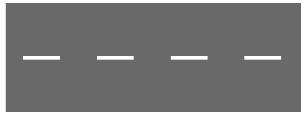
- Reversible Road or Lane - White Double Dashed
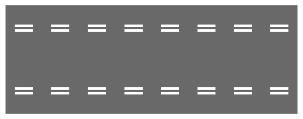
- Solid Double White Separation Line
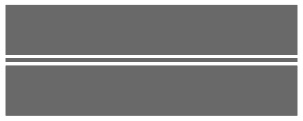
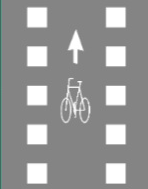
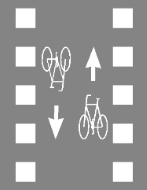
- Bicycle Path or Lane
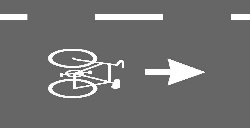
- Dense dashed - warning
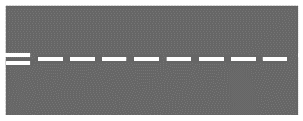
- Dashed next to solid
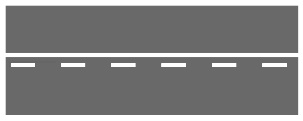
- Solid Yellow Line
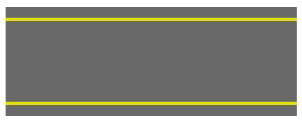
- White Rectangle Line
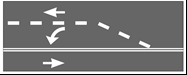
- White Dashed Line - Junction Turn
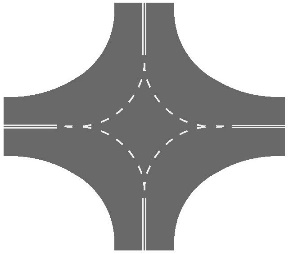
- Stop Line - White Line Across Lane
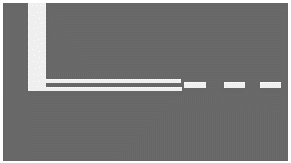
- Pedestrian Crossing
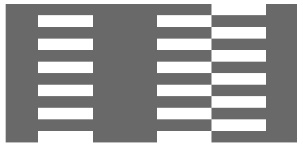
- Bicycle Crossing
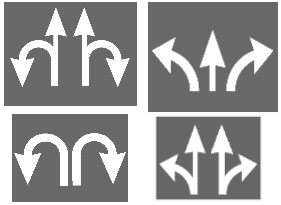
- White arrows on road
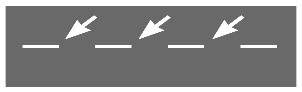
- Lane Ending - White Diagonal Arrows
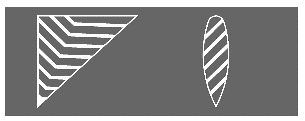
- White traffic islands
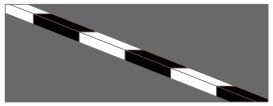
- Black-White Painted Curbs
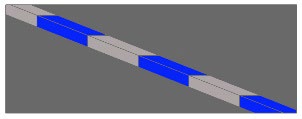
- Blue Striped Painted Curbs
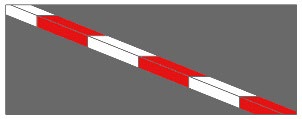
- Red-White Painted Curbs
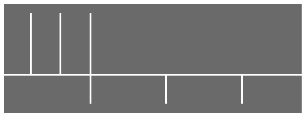
- Parking Spaces Marked in White
- No Parking Area Marked in White
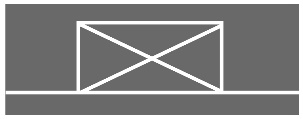
- Speed Bump Location
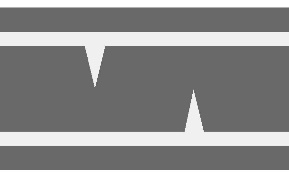
- Bicycle Crossing
Signs
Study signsAbout these signs
Road markings are the one sign family that doesn't stand on a pole — it's painted onto the asphalt itself, and you read it by looking down at the road rather than off to the side. Most are white: lane lines, separation lines, arrows, zebra stripes and stop lines. Yellow marks a special restriction along the kerb, and painted kerbstones add their own layer about stopping and parking. The shape is the key — a solid line, a broken line, a row of triangles, a zebra or an arrow — and each shape states a different rule.
The message is always local and exact: what is allowed right where you are. A solid line forbids crossing and overtaking; a broken line allows it when the road is clear and safe; and where two lines run side by side, the one on your side decides. A stop line is a wide white bar where you must halt fully, while 'give way' is a row of triangles where you slow and yield without always stopping. A zebra gives pedestrians priority, a hatched diagonal area must not be entered, and lane arrows fix which way you may turn. Red-and-white kerbs ban stopping; blue-and-white mean paid parking.
On Move you study road markings as their own group in the sign library, drill them again and again, and every question carries an explanation showing why a line or arrow means what it does — understanding the logic, not memorising a picture. The smart review queue brings back exactly the markings you confused, like the solid line versus the broken one, the readiness meter shows when your recognition is steady, and you can study in English or any of six languages — free and with no sign-up.
Frequently asked questions
How do I tell road markings apart from the signs on poles?
The distinction is simple: road markings are painted on the road surface and you read them looking down, while signs stand on a post at the roadside with their own shape and colour. Often the marking reinforces what a sign says — a stop line in front of a 'stop' sign, a lane arrow under a direction sign. In a test question, notice whether the image shows the road surface or a sign panel; that already points you to the right family.
What's the difference between a solid line and a broken line?
A solid line forbids you to cross or overtake — it marks a place where moving to the other side is unsafe. A broken line allows crossing and overtaking when the road is clear and safe. Where two lines run together, one solid and one broken, the line on your side is what counts: if yours is solid you may not cross, even if it's allowed from the other side. This is one of the most-tested points in road markings, so make it automatic.
How do I tell a stop line from a give-way line?
A stop line is a single wide white bar across the lane, and you must come to a full stop before it — usually at a 'stop' sign or a traffic light. A give-way line is a row of white triangles pointing at you ('shark's teeth'), where you slow, check and yield, but need not stop if the road is clear. This is the pair people confuse most, and the difference is between a complete stop and slowing to give way.
How are road markings tested, and can I study in my language?
A question shows a photo or diagram of the road surface — a line, an arrow, a crossing or a coloured kerb — and asks what is allowed or what the correct action is. The colours and shapes are international, but on Move the question wording and explanation appear in six languages: Hebrew, Arabic, Russian, English, French and Spanish. Understand the meanings in your mother tongue, practise in Hebrew to get used to the exam's phrasing, and use the sign library to run through every kind of marking.