
Work Zone
Work zone signs on an orange background mark active roadworks and require extra caution.
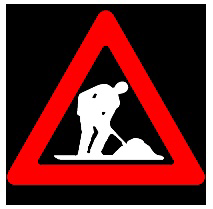
- Roadworks ahead
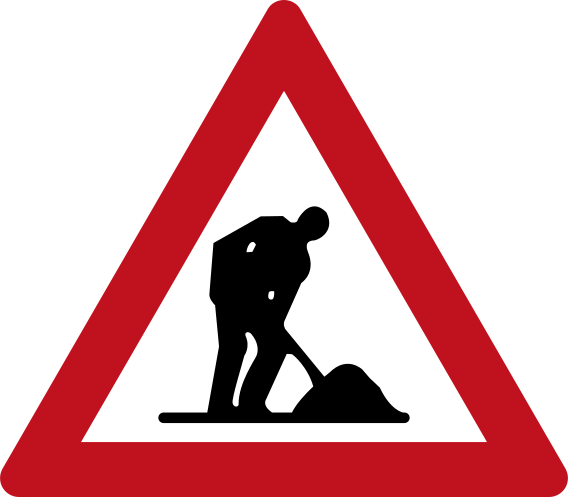
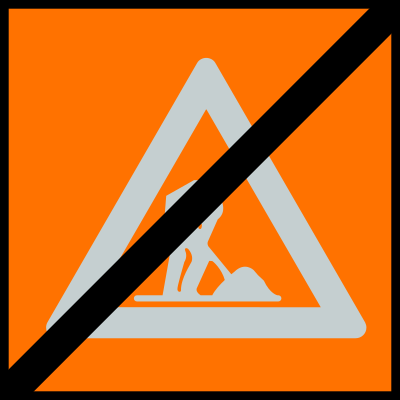
- End of Work Zone
- Sharp Curve Warning in Work Zone

- T-Junction Warning in Work Zone
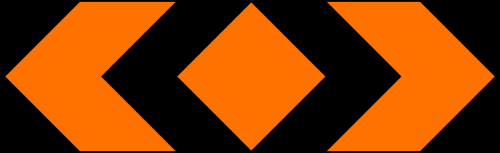
- Road Narrows in Work Zone
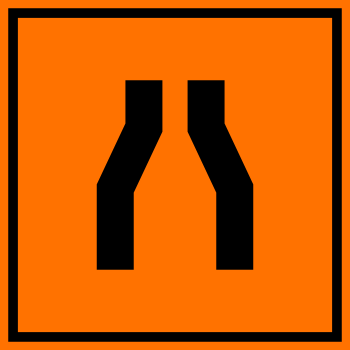
- Road Narrows on Right in Work Zone
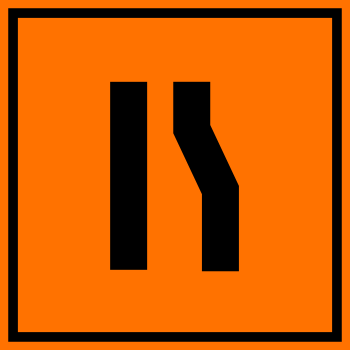
- Road Narrows on Left in Work Zone
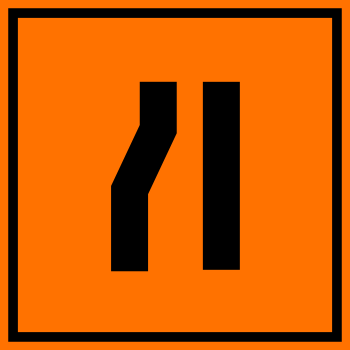
- Narrow Passage or Obstacle in Work Zone
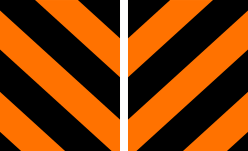
- Two-Way Traffic in Work Zone
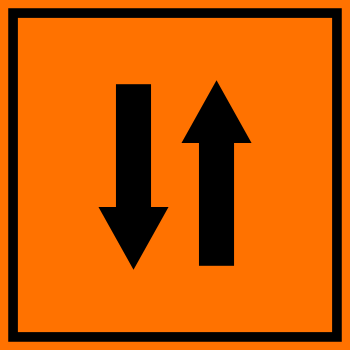
- Lanes Increasing - Right in Work Zone
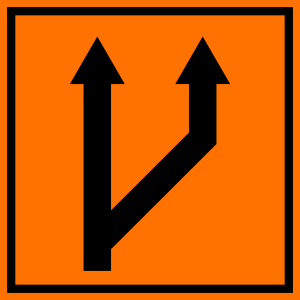
- Lanes Increasing - Left in Work Zone
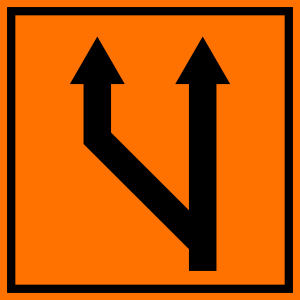
- Lanes Decreasing - Right in Work Zone
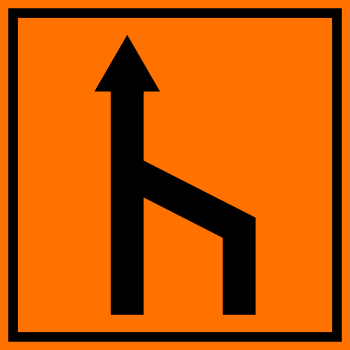
- Lanes Decreasing - Left in Work Zone
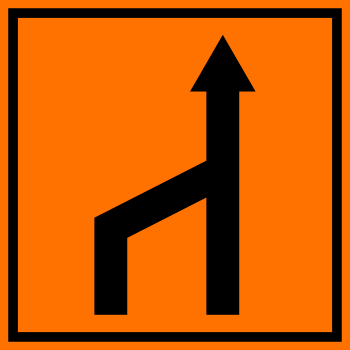
- Traffic Diversion in Work Zone
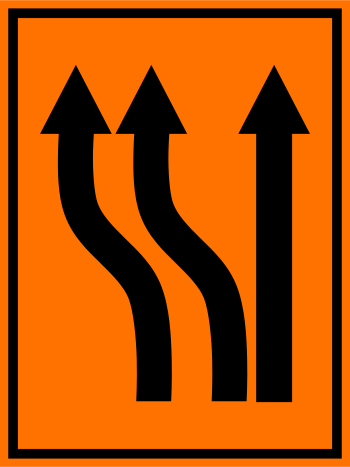
- Temporary work zone sign
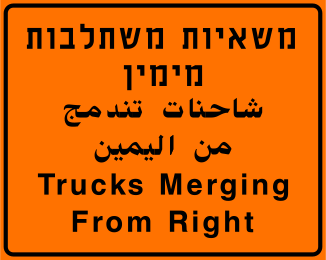
- At Distance in Meters (Work Zone)
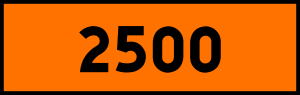
- Along Section Ahead in Meters (Work Zone)
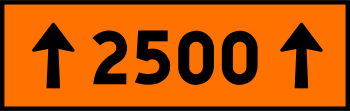
- Lane Line - Orange Dashed

- Reversible Lane - Orange Double Dashed
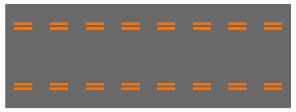
- Solid Double Orange Separation Line
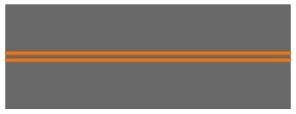
- Dense orange dashed - warning

- Dashed next to solid orange
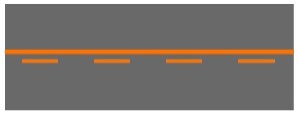
- Orange Rectangle Line
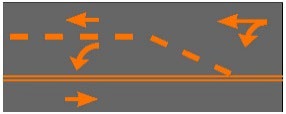
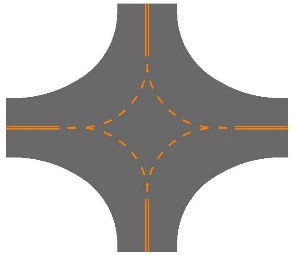
- Orange Dashed Line - Junction Turn
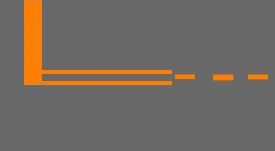
- Orange Stop Line
- Orange arrows on road
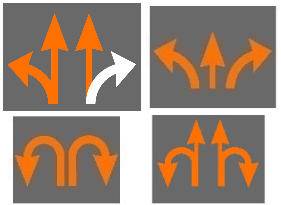
- Lane ending (orange)
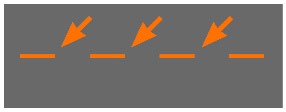
- Orange traffic islands
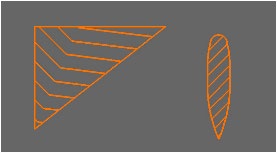
- Barrier

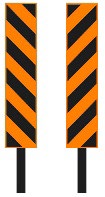
- Guidance posts at the roadside
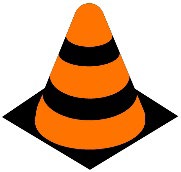
- Cone for guidance or for marking an obstacle
- Flashing Orange Light

- Portable Flashing Board
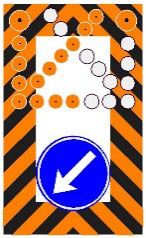
- Portable Flashing Board - Road Closed
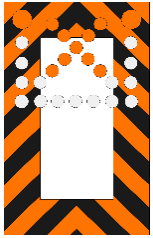
- Emergency Stopping Bay in Work Zone
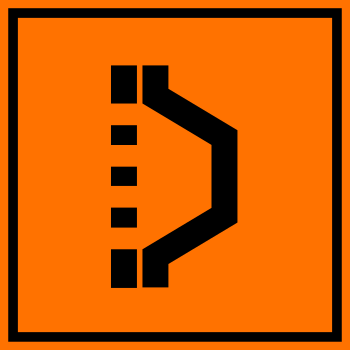
- Road works ahead (portable sign)
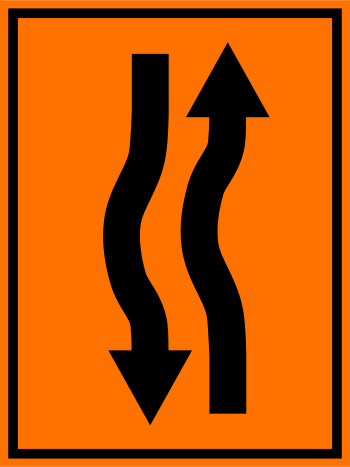
- Traffic Diversion in Work Zone
- Portable Flashing Board

- Portable Flashing Board (with Direction Arrow)
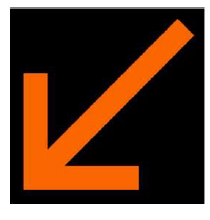
- Portable Flashing Board - Road Closed (with X)

Signs
Study signsAbout these signs
The work-zone family is recognised first by colour, not by shape. While permanent signs sit on white or blue, the temporary signs of a roadworks area come on an orange or yellow background — a warm, eye-catching colour that says 'the road has changed here, right now'. They appear before the works and inside them: the worker-with-shovel warning, a temporary speed limit, and arrows for a closing or shifting lane. The colour itself is the signal — when something orange appears, the usual road rules may no longer hold.
Inside the family, each sign manages your passage through the works. Arrows on an orange field tell you a lane is closing and you must merge, or that the lane is being shifted sideways around the dig. A temporary speed limit drops your pace for the narrowed, uneven stretch. Diversion arrows route you onto an alternative path. A flag-person or a 'prepare to stop' sign hands control to a human directing traffic. Red-and-white barriers and cones physically mark the edge of the work.
The golden rule of this family: a temporary instruction overrides the permanent sign or road marking it contradicts. If the painted line says one thing but the orange arrow and the cones say another, follow the temporary one — it reflects the road as it actually is right now. With Move you learn to catch the orange colour first and then read fast. The sign library shows them side by side, practice and the smart review queue bring back what you confused, and the readiness meter shows when recognition is instant. All free, in six languages.
Frequently asked questions
How do I tell a temporary work-zone sign from the permanent one with the same symbol?
By its background and where it stands. The same worker symbol can appear as a permanent warning on white inside a red triangle, but in a work zone it comes on an orange or yellow background — and that background is the difference. Temporary signs are also placed temporarily: on a portable stand, beside cones and barriers, sometimes with a flag-person. If the colour is warm and bold and the sign looks 'set down for now' rather than fixed in the ground, it's a works instruction — and it most likely overrides whatever was here before.
Which signs get confused most inside a work zone?
The first pair is 'lane closed' versus 'lane shift': both show an arrow on orange, but in one the lane ends and you must merge, while in the other the lane merely bends sideways and continues. The second is the temporary speed limit versus the permanent one — the same red circle, but the temporary value rules until the end of the stretch, after which the normal speed returns. Learners also mix a diversion arrow with an ordinary direction arrow. On Move you drill these pairs side by side until the difference is clear.
If a temporary sign contradicts the road markings or a permanent sign, which do I obey?
Always the temporary instruction. The works signs, the shift arrows and the flag-person reflect the road as it is right now, so they override the painted lines and the permanent signs around them — even when that means crossing a solid white line into a temporary oncoming lane, or driving slower than usual. The logic is simple: the permanent signing describes the road on ordinary days, the temporary describes it today. The temporary instruction stays in force until you leave the work zone.
How are work-zone signs tested, and can I study in my language?
In the test a picture of a sign or of a work-zone situation appears, with a multiple-choice question about its meaning or the correct behaviour — for example what to do at a flag-person, or which instruction wins when the temporary contradicts the permanent. On Move the question wording and the explanation appear in six languages — Hebrew, Arabic, Russian, English, French and Spanish. Understand the logic in your mother tongue, then practise in Hebrew to get used to the exam's phrasing.